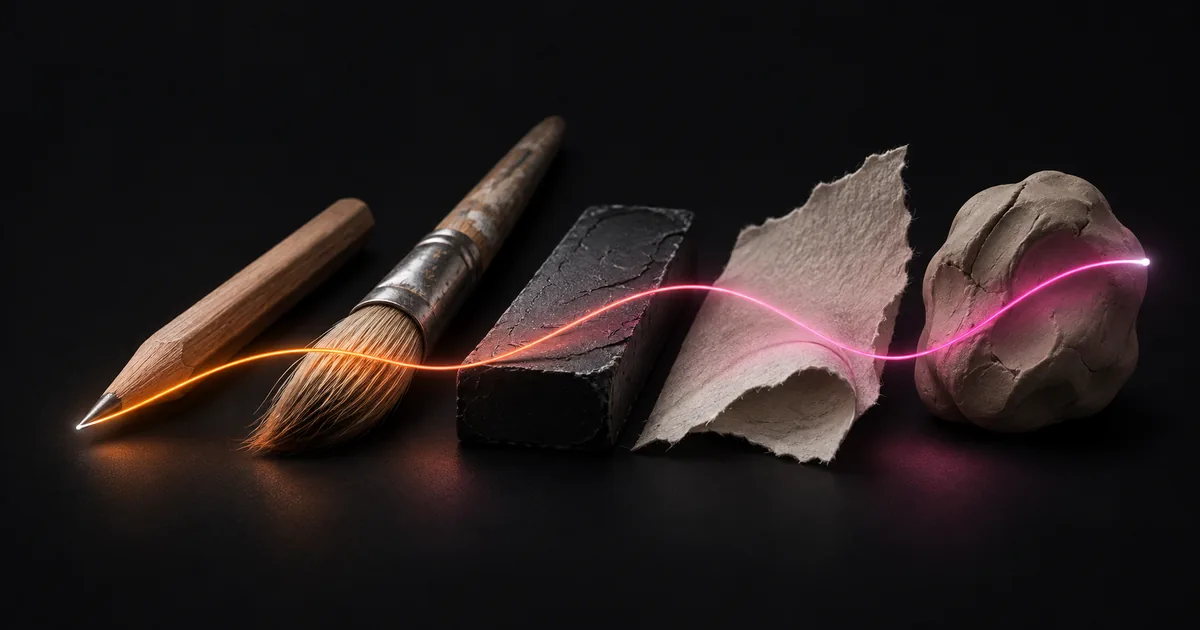
A coat can be a single loaded brushstroke. A landscape can be two torn pieces of paper. The way an image is made changes how its story feels—before anyone reads a caption.
For creators planning visual stories for 2027, this guide groups 60 art directions into 10 families, with 72 AI-generated image experiments and the exact prompts used to make them. Twelve are reference-based comparisons that change one material decision while trying to preserve the scene.
Open the Art Style Library → Browse the images by category, copy a complete prompt, or download the full collection. The library has an evergreen URL; this article is a guide for planning your next projects, not a prediction of which styles will trend.
Choose a family before choosing a filter
This collection mixes historical movements, drawing media, production techniques and newly proposed hybrids. Those are different kinds of art direction. A material tells you how marks behave; a movement may also shape composition, proportions and the role of ornament. There is no finite list of every visual art style.
| Family | Directions in the collection | Start here |
|---|---|---|
| Drawing | Graphite, charcoal, ballpoint, drypoint, brush ink, colored pencil | Explore drawing |
| Painting | Gouache, watercolor, impasto oil, egg tempera, pastel, encaustic | Explore painting |
| Linocut, woodcut, risograph, screenprint, monotype, cyanotype collage | Explore print | |
| Cartoon | Rubber hose, UPA modernism, doodle, clear line, graphic memoir, cut paper | Explore cartoons |
| Comic and animation | Painted planes, halftones, shonen, shojo, noir, cel animation | Explore comics |
| Graphic design | Bauhaus geometry, Swiss poster, constructivism, Art Deco, psychedelic, Memphis | Explore graphic design |
| Folk and decorative | Persian miniature, ukiyo-e, Madhubani-inspired, folk cut paper, Art Nouveau, naive painting | Explore decorative directions |
| Handmade materials | Torn paper, photomontage, clay, felt, embroidery, scratchboard | Explore tactile images |
| Space and systems | Pixels, isometric rooms, low-poly forms, cutaways, chalk, optical patterns | Explore spatial ideas |
| Experimental hybrids | Chrome and charcoal, scan and vector, woven pixels, glitch woodcut, clay and ink, surreal diagrams | Explore hybrids |
Drawing: let the mark describe the thing
A ballpoint image needs more than a blue tint. In the mechanical-sparrow experiment, overlapping hatch bundles follow the hands and the bird's body. The open paper around the repair keeps the small action readable. In the brush-ink image, the coat becomes a large black shape that shields a tiny warm flame.
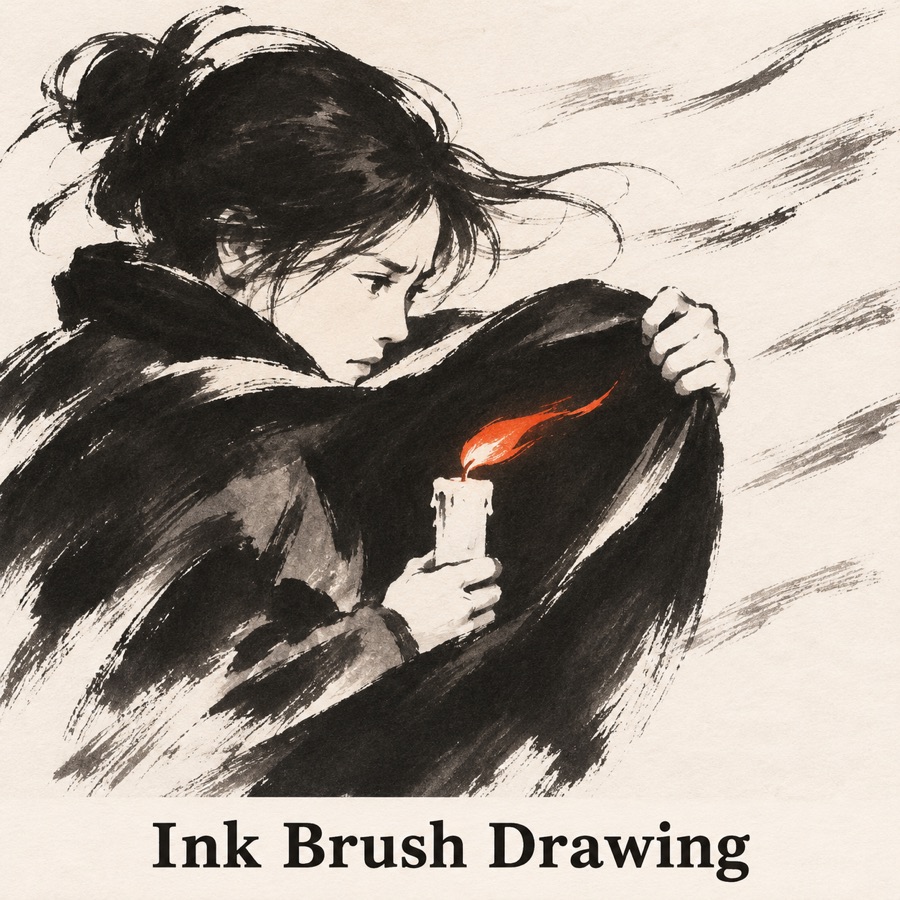
Try drawing when the story depends on a gesture, a face, a small object, or a personal observation. Ask for line pressure, hatch direction and places where the page stays untouched. Those decisions are more useful than asking for an image to look “handmade.”
Watch the result: our doodle brief requested felt pen, but the fill looked closer to wax crayon. The image remained useful; it did not become a precise felt-pen example just because the prompt named it.
Painting: edges carry as much information as texture
Gouache uses opaque painted shapes in the cloud-delivery image. Watercolor leaves the light in the paper and softens the flooded room through transparent washes. The subjects differ, so this is a demonstration of range rather than a controlled medium comparison.
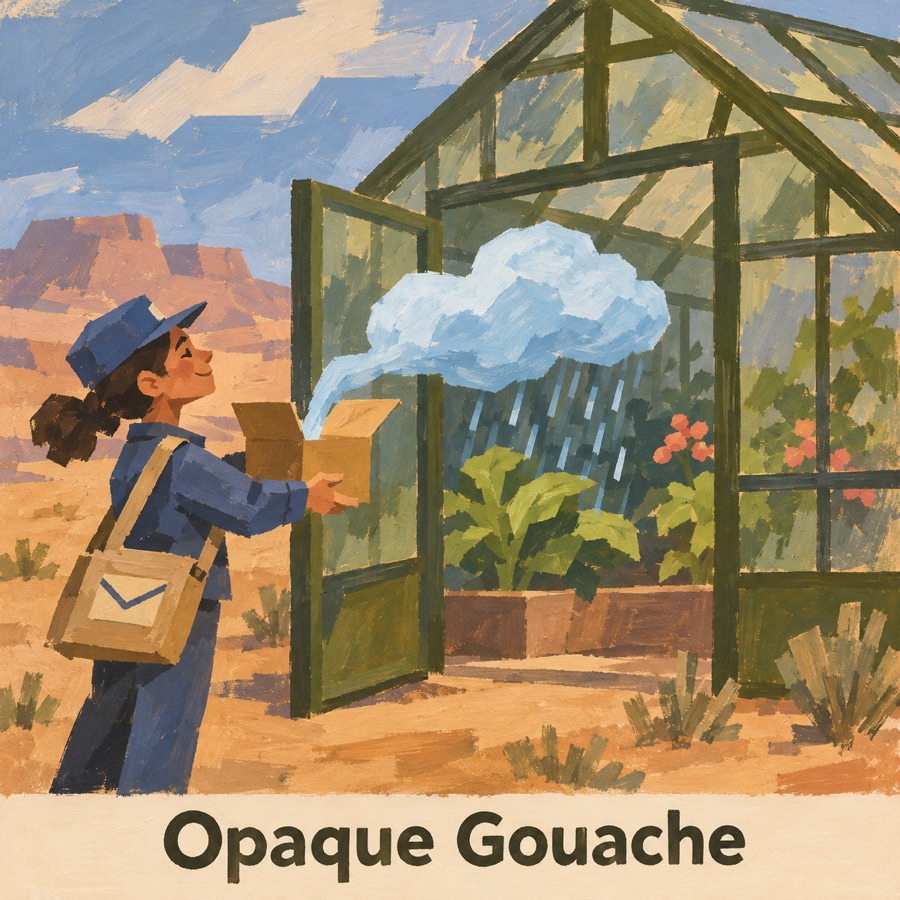
For a useful painting prompt, specify which edges stay firm and which dissolve. Keep the story's focal action separate from its surroundings in light and dark. Adding more grain afterward cannot repair a composition that hides its subject.
Printmaking: fewer colors can tell a clearer story
The linocut fisherman catches a mustard-colored house against navy ink. The image works through broad carved channels and a strong diagonal. The B edit adds fine directional cuts inside those shapes; it becomes busier and starts to look embossed. More texture did not improve the fast read.
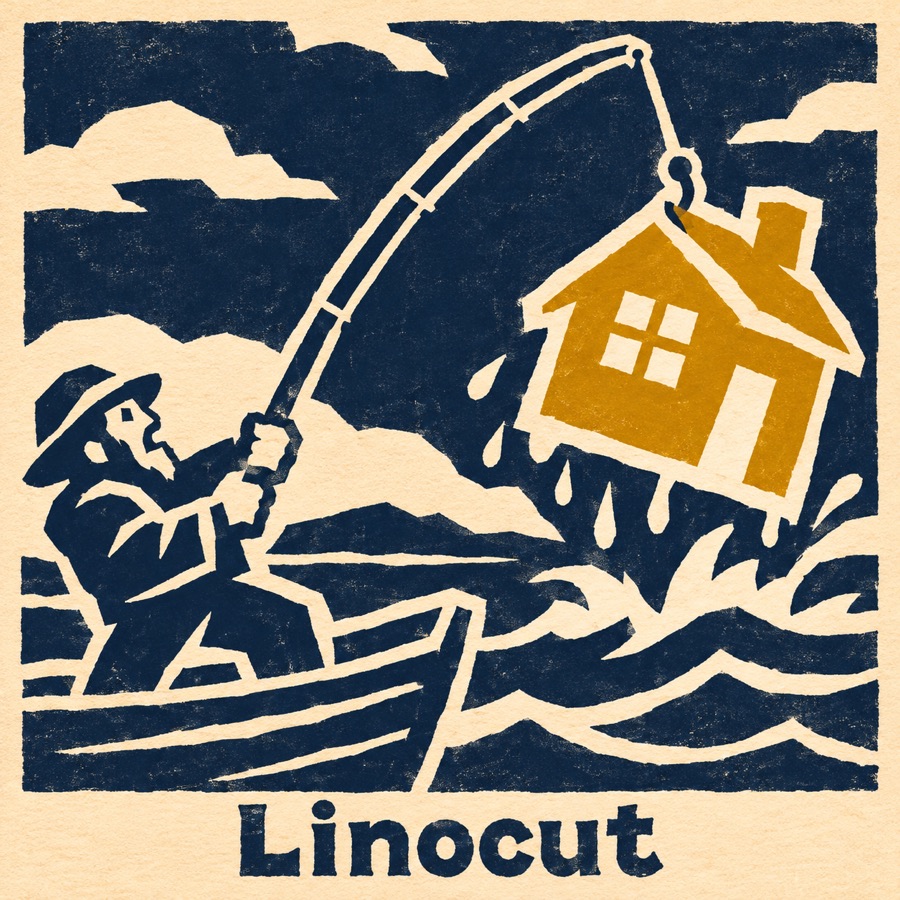
Use print-based directions when you want a bold silhouette, a limited palette, or repeatable graphic scenes. Describe the ink blocks, cuts, registration and overlap. Keep simulated paper wear subordinate to the image.
Cartoons, comics and animation: make the pose do the work
The rubber-hose alarm clock strains against the sunrise's power cord. The UPA-inspired salesman leans away from a small rain cloud. Both scenes communicate through pose and proportion.
The painted-animation experiment uses broad facial planes and a sharp amber edge light. The halftone courier uses ink contours, patterned shadows and a localized color offset. These directions translate qualities associated with painterly animation and mixed-media comics into specific instructions, with original subjects and scenes.
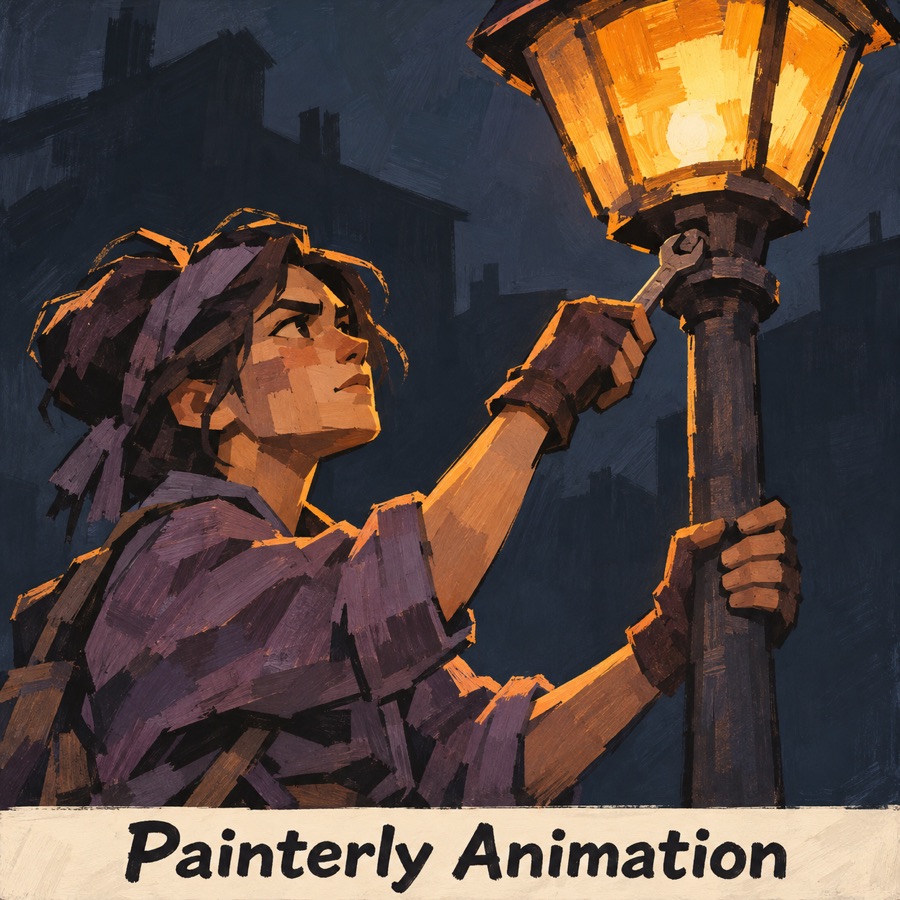
For still-image storytelling, choose a pose that already contains the action. A small camera move or a separately animated prop can then reveal something that matters. This collection does not promise ready-rigged characters or automatic layers.
Graphic design: give simple forms a specific job
A small person pushing a huge square communicates effort. A triangle facing a chair made from circles suggests an awkward fit. The Swiss-style boat image is visually clean, but the intended idea—redirecting a river—is ambiguous. It can look like a boat simply following a bend.
That is a useful test for any graphic metaphor: can a stranger see the intended relationship without the explanation? Keep the shapes that answer that question, then decide what else the image needs.
Folk and decorative directions: keep the interpretation visible
The miniature-inspired gardener plants a small sun in a flat Persian courtyard. Botanical detail supports the scene. The ukiyo-e-inspired traveler waits for a giant heron ferry. The Madhubani-inspired scene uses bounded repeated lines around two neighbors and a tree.
These are contemporary AI-generated interpretations, not historical originals or authoritative examples of living regional traditions. For projects about a particular tradition, study real works and their context alongside these experiments.
Handmade materials: make the material part of the action
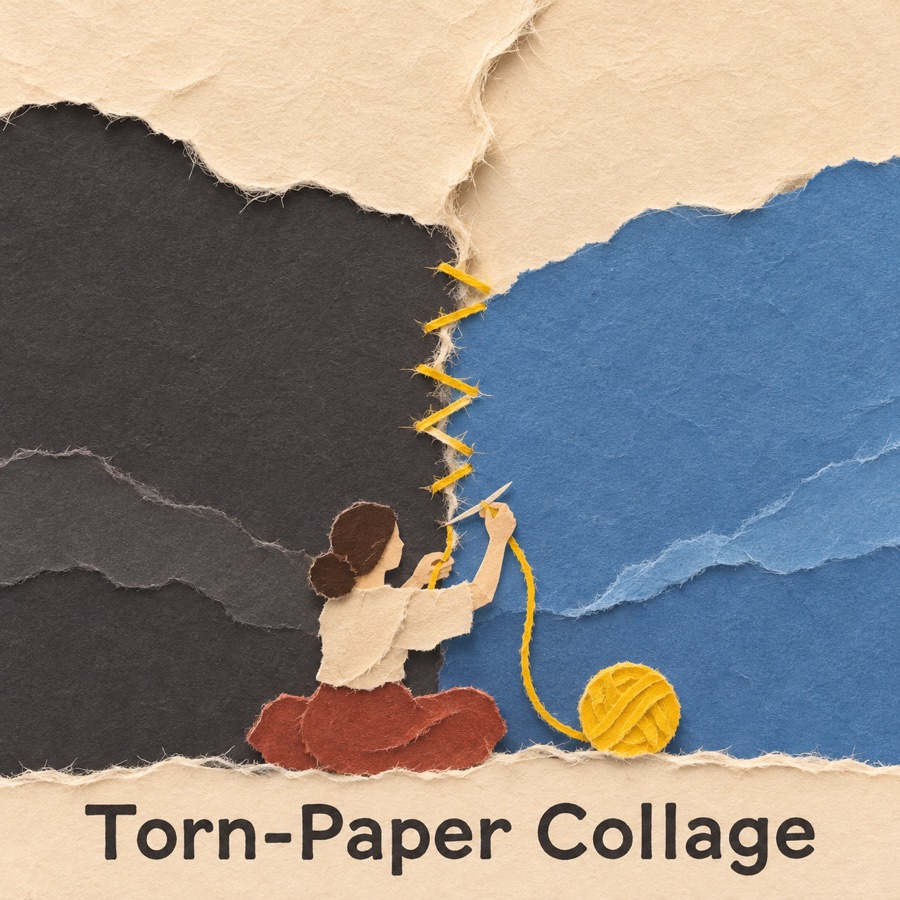
The torn-paper landscape is being stitched back together. A felt bear repairs a hole in the sky. A clay librarian pushes a scribbled ink storm onto a shelf. The medium is involved in what happens.
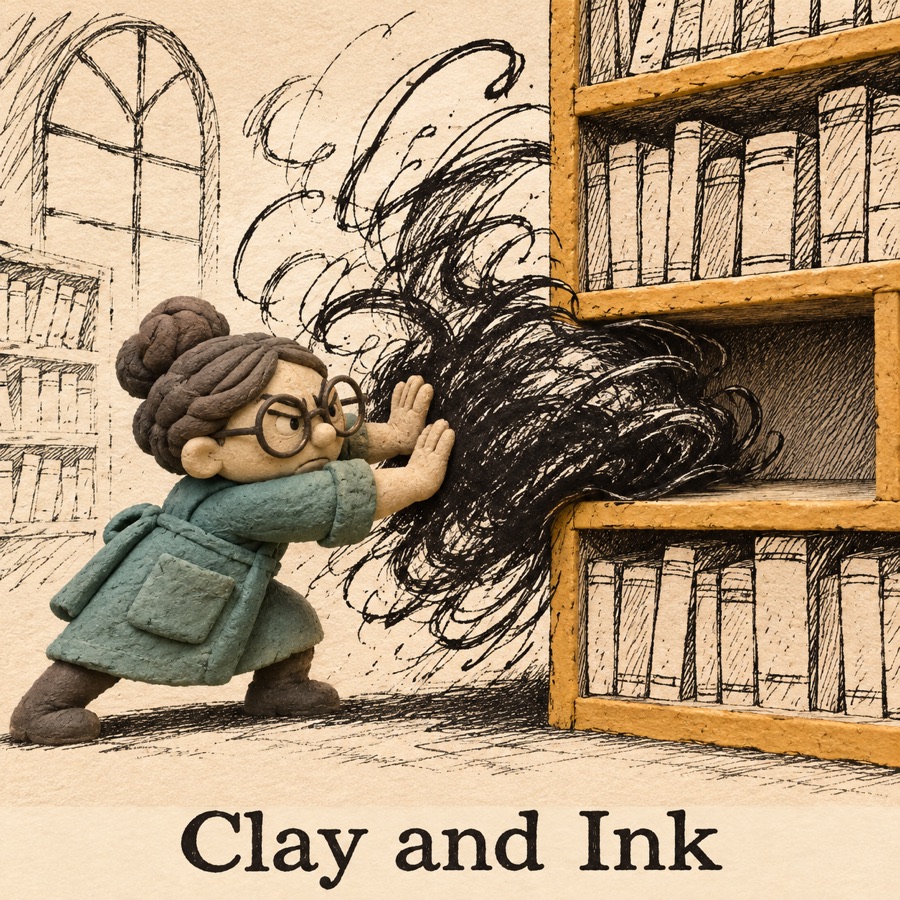
These were among the clearest material-and-story relationships in this collection's visual review. That is an editorial judgment, not audience-performance data. The clay snail also shows a miss: its apartment became a wheeled trailer rather than a shell.
Experimental directions to test for your 2027 projects
The six hybrids are creative proposals. They are not established art-history labels or verified trend forecasts:
- Chrome and Charcoal: one reflective object interrupts a rough drawing.
- Scan and Vector: a precise graphic shape changes the meaning of a sketched scene.
- Woven Pixels: the pixel grid becomes physical thread.
- Glitch Woodcut: a digital break disrupts a carved world at one story-critical point.
- Clay and Ink: a solid character interacts with unstable drawn matter.
- Quiet Surreal Diagram: a sober drawing explains one impossible emotional mechanism.
The useful question is whether the collision has a reason to exist. A mirrored balloon gives a drawn world one reflective surface. A broken bridge gives a glitch somewhere specific to act.
How to use the prompts
- Find a direction in the library. Read its material description and look at the actual output.
- Copy the complete prompt. Replace the scene with one clear action from your own story while preserving the material rules.
- Generate one frame and inspect its silhouette, text, anatomy, object joins and focal contrast.
- Change one prompt block at a time. Use the accepted image as an edit reference when preserving composition matters.
- Test the same character or object in a second scene before treating the look as a repeatable identity.
For a fairer style comparison, use the same subject, action and framing across your shortlisted directions. Our main atlas varies subjects to show range. The B pairs are closer comparisons, but reference edits can still change details beyond the requested variable. Our finer-halftone edit, for example, introduced ring-like marks instead of smaller solid dots.
The prompt structure follows OpenAI's image-prompting guidance: specify the result and composition, quote exact visible text, and distinguish the requested edit from details to preserve.
Download and reuse
Download all 72 full-size images and prompts. The ZIP is organized by category and style. Every experiment includes its original PNG, exact executed prompt and a short description. B prompts require their matching A reference image, which is included in the pack.
All images are 1254 × 1254 pixels. We dedicate our rights, if any, in this asset collection under CC0 1.0 Universal. Commercial use, modification and redistribution are welcome; attribution is optional. The dedication does not clear third-party trademark, privacy or publicity rights, and it does not apply to AtomCut's software or branding.
Are these hand-drawn originals?
No. They are AI-generated experiments directed toward particular materials and mark-making systems. Some match the brief more closely than others. Inspect the actual result before using it as a reference for a physical technique.
Can I use the images commercially?
Yes, under the CC0 dedication for rights held by AtomCut. No purchase or attribution is required. Read the included license for its scope.
Can I get the exact same result from a prompt?
A prompt is a record of direction, not a reproducibility guarantee. Output depends on the model and its settings; B variants also use a reference image. The internal model identifier was not exposed by the image tool used for this collection.
Can I animate them in AtomCut?
You can use the still images as source material. For independent movement, prepare separate foreground objects and backgrounds, and reconstruct areas hidden behind moving pieces. Keep captions editable. Start with one movement that reveals the story's focal relationship.